F.I.S.T.: Forged In Shadow Torch (PS4)

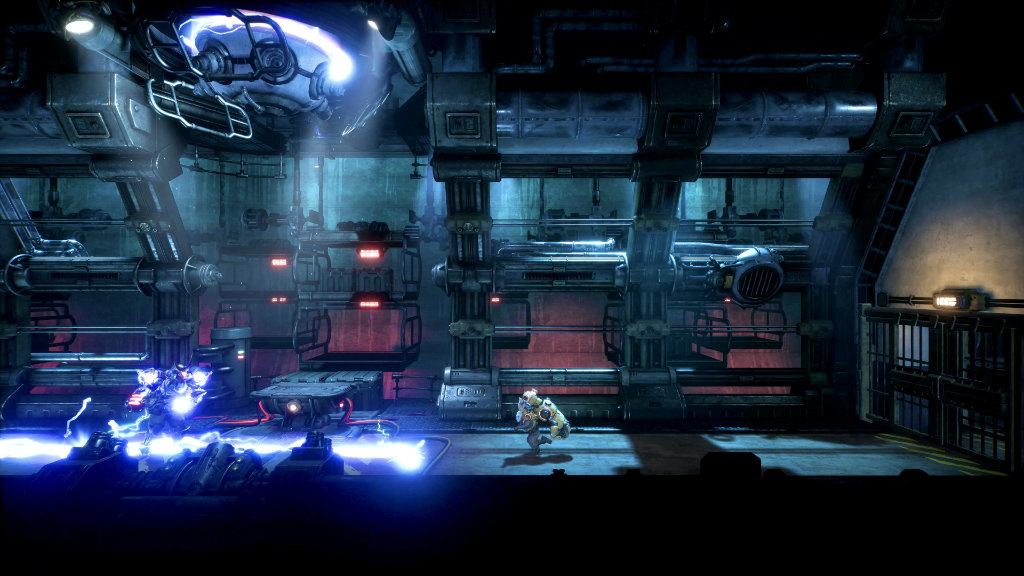
The first impression of F.I.S.T.: Forged in Shadow Torch is basically that of opulence. Its graphical style is overtly detailed. The city manages to be overwhelming and sparsely populated at the same time. The character model of Ray itself is simplistic save for the ginormous mechanical fist that serves as a weird backpack. Teleporters and Terminals for movement and skill management are richly animated.
It feels like someone let the artists out of their cage and they simply made what they felt like without regard for what they were building.
Which is quite a shame, because FIST is pretty good once you get into it. It’s not exactly a top tier metroidvania, but it’s not the lowest of the lows like Chasm as well. Combat and exploration are mixed competently, albeit rather straightforward.
Like Guacamaelee! 2 this game presents its mechanic-based obstacles as mere bonuses and rarely puts them in the way of players. If they do, it’s primarily to gate an area. Corridors and areas have a tendency to snake back into each other which is good, but it doesn’t exactly generate surprise and wonder with in doing so.
In fact it’s rather similar to Guac 2 in that respect: it places a large focus on combat. Unfortunately, unlike Guac 2, combat lacks a few tricks to make it truly engaging. There are combos and moves aplenty, all performed with directional input while bashing a light or heavy attack, but there’s a curious absence of a block or dodge. That is to say, there is a dash, but it doesn’t have i-frames to deal with attacks and cannot move through enemies. Likewise, there is a block, but it uses up a resource that can also be used to heal, so its appeal is minimal to say the least.
Fights seem to practically beg for a dodge or block though, and it’s rather uncomfortable to have you and your enemies perform battle ballet moves, only for Ray to dodge most attacks with a stoic jump straight out of Super Mario Bros.
It says a fair bit that this isn’t a turn off for the game. It grates a bit, but the general flow is good enough for it to hold together. For the more experienced Metroidvania player it’ll turn into a paint-by-numbers exercise rather quickly.
The Chinese style in general might take some getting used to though, story wise it’s all pretty good, but the story beats might be a bit different than a western audience might be accustomed to, with a lot of cultural shortcuts and tropes being deployed that might simply feel a bit alien. Even if you’re used to some Japanese fare. The English translation and dub seems to deftly avoid most of the pitfalls such a presentation could bring.
That said, it can’t paper over some of its inherent flaws.